
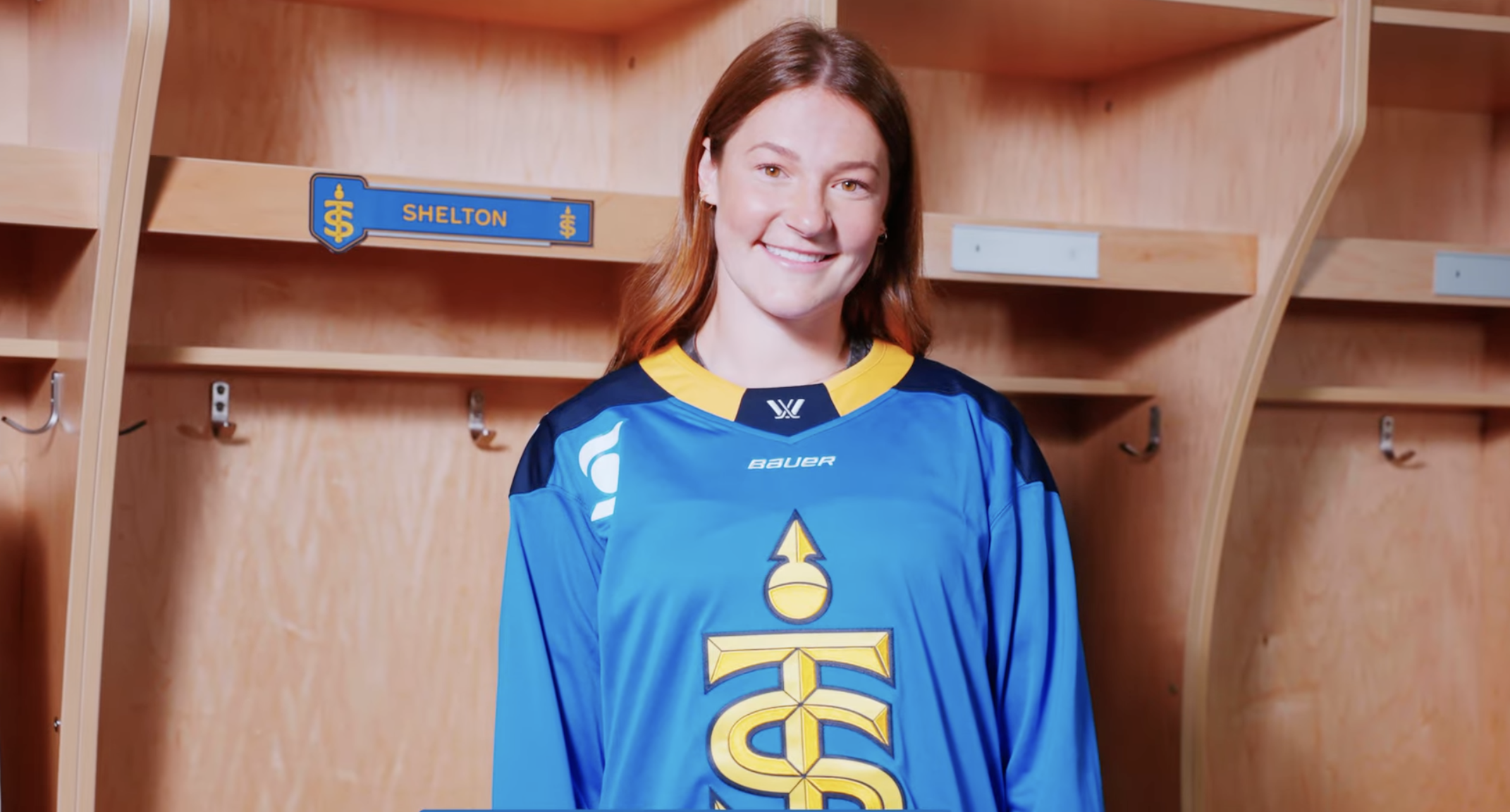
The Toronto Sceptres have been a serious contender for the Walter Cup in both of the previous seasons of the PWHL. In the 2024 regular season, the team ranked 1st in the standings. In 2024–2025, it ranked second. With this in mind, it may come as a surprise that the Sceptres have missed the postseason for the first time in franchise history.
So what actually happened to the Sceptres this season?
Expansion Draft Losses
Before getting into this season, it’s important to note what this team endured in the prior offseason.
The Sceptres lost exclusively forwards in the expansion draft. This included key names in Sarah Nurse and Hannah Miller. In 2024–2025, Miller had put up 10G and 14A for 24 points, good for second in team scoring, in 29 games. Nurse had six goals and eight assists—14 total points—in 21 games played.
The other expansion losses were Izzy Daniel and Julia Gosling, who have both improved point production on the West Coast. Gosling, in particular, has had a breakout season, with a 20-point campaign in Seattle.
Absence of Offence
The current Toronto forward core simply couldn’t compensate for these losses. The team ranked dead last in goals for in 2025–2026 with 51, 12 fewer than the next-closest team.
Its power play ranked 7th in terms of efficiency at 10.8% and last in terms of goals scored on the player advantage, with only 7.
The lack of scoring reflects on the stat sheet of individual players. The Sceptres did not have a single player record a 20-point season this year. Every other team in the league had at least one, and every other original six franchise had at least two.
Notable Underperformers
Daryl Watts
Watts had a breakout season in 2024–2025 with 12 goals and 15 assists for 27 total points in 30 games. With Nurse and Miller heading west, she was expected to be a key leader in the Sceptres’ offence.
While she led the team with 19 points in 27 games played, these numbers pale in comparison to what was expected of her with other big names absent.
Natalie Spooner
Spooner has, so far, failed to return to the form that earned her the Billie Jean King MVP award in the league’s inaugural season. That year, she had 27 points in 24 games.
She spent much of the 24–25 season rehabbing an ACL tear sustained in the 2024 playoffs, but there was hope for her production after she put up five points in a nine game stretch following her return. (She played 14 games in that season.)
However, she has not performed to this level in 2025–2026, managing just three goals and five assists for eight points in her first full season since injury.
Ella Shelton and Renata Fast
These two are grouped together because it feels impossible to talk about one without mentioning the other.
The Sceptres made waves at last year’s draft by trading the 3rd overall pick to New York for Ella Shelton, and immediately talk began surrounding the possibility of pairing her with Renata Fast, another offensive defender.
Shelton’s 2024–2025 campaign saw her record eight goals and eight assists for 16 points, good for 5th in scoring and 4th in goals on the Sirens despite playing just 24 games.
Similarly, Fast’s season in Toronto saw her as the 3rd leading scorer in Toronto with six goals and a team-leading 16 assists—22 total points.
While both blue liners ranked top-5 on the Sceptres in time on ice, their offensive numbers never reflected the prior season. They combined for 17 points compared to a combined 38 the year before.
Fast scored 10 points, a career low in the PWHL. Nine were assists. She only had one goal.
Shelton’s seven points were also a career low in the league, with three goals and four assists.
When considering that in acquiring Shelton, Toronto gave up the pick that the Sirens would use to draft Casey O’Brien, who scored 21 points in 28 games with New York, these numbers look especially bleak.
Unless, of course, Toronto wasn’t planning on using her anyway.
The Rookie Problem
Particularly since the Olympics, Sceptres Head Coach Troy Ryan has become known for not necessarily developing younger players or giving them ice time. His tenure in Toronto tells a similar story.
Despite the amount of scoring power lost in expansion, and that simply didn’t show up in veteran players, Toronto lacked rookies who could step up. Of their five rookies, only three played more than half of the season.
Toronto’s second-round pick, Kiara Zanon, averaged just under 12 minutes per game, ranked 20th among rookies and 13th among the Sceptres. She managed just three points in 27 games played, one goal and two assists.
These lackluster numbers made her Toronto’s best-performing rookie. Looking deeper into the draft class reveals similar numbers among other first-years on the team.
Looking Ahead
So how can Toronto move forward from this year?
First, it’s worth acknowledging where the team succeeded. The Shelton trade suggested they were aiming to be a defence-first team. They did fairly well with that, allowing just 72 goals. Their penalty kill operated at 85.1% efficiency. Both of these stats place 3rd in the league, each behind only Montreal and Boston.
Second-year net minder Raygan Kirk also put up overlooked numbers. In 23 games played, she had a .934 save percentage and a 1.87 goals against average. This places her only behind Ann-Renée Desbiens and Aerin Frankel in both categories. She also had three shutouts, including one late in the season to keep Toronto’s playoff hopes alive.
This means Toronto’s key objective for the offseason should be clear: the focus should be on forwards and offensive production. If possible, finding players who are able to support Watts’s capabilities and create a dynamic line with her would be key. It also wouldn’t hurt to infuse some youth into the forward core.
If this can be done, expect to see Toronto back in the playoffs soon.




Leave a Reply